The need
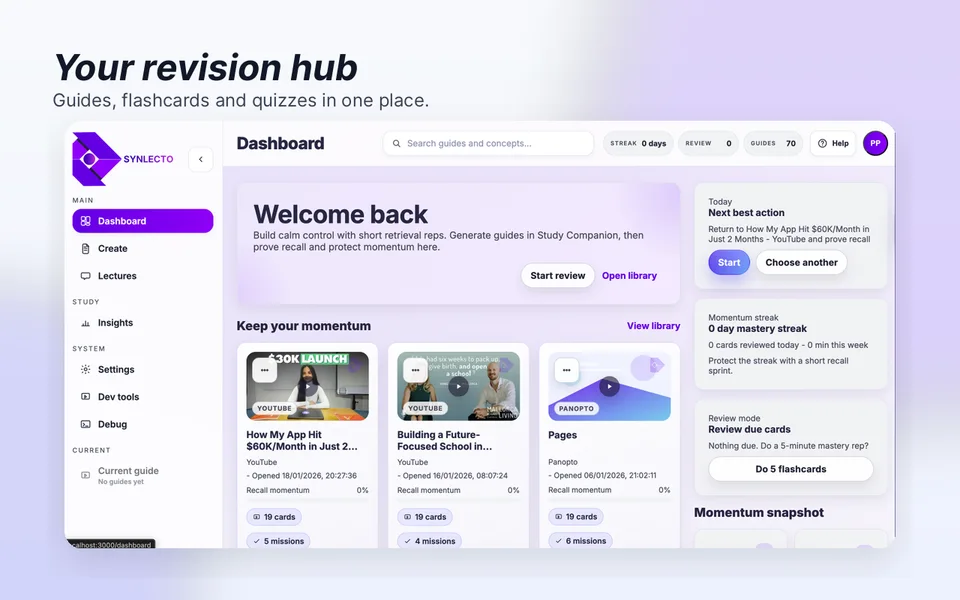
Having a recording does not automatically give a student a manageable way to study. I wanted to help learners find a starting point, revisit the original teaching and practise what they understand.
My contribution
- Define the product’s learning purpose and direct Codex-assisted development, from requirements and reusable project instructions to implementation review and acceptance checks.
- Connect the OpenAI Responses API with a web application and browser extension. The product brings together structured guides, flashcards, quizzes and study activities with links back to source material.
- Work through authentication, data storage, generation failures and browser behaviour. Weigh source coverage, latency and cost, and make incomplete coverage visible.
- Prepare materials for institutional conversations about accessibility, privacy, security and the boundaries of proposed integrations.
What came from it
A public product that people can explore, alongside documented boundaries for institutional review. Synlecto is my independent work, separate from Queen’s University Belfast. Learning impact and institutional use are questions for future evaluation.
What I learned
Building the product has made me more careful about the difference between an impressive output and a useful learning experience. Source checks, clear limitations and a route back to the teaching matter as much as generation.