The need
A written response is only one way for a child to show what they understand. Teachers also need manageable ways to capture spoken explanations, practical work and the process behind a finished piece. My work connected that learning purpose with classroom tools and support for teachers and families.
My contribution
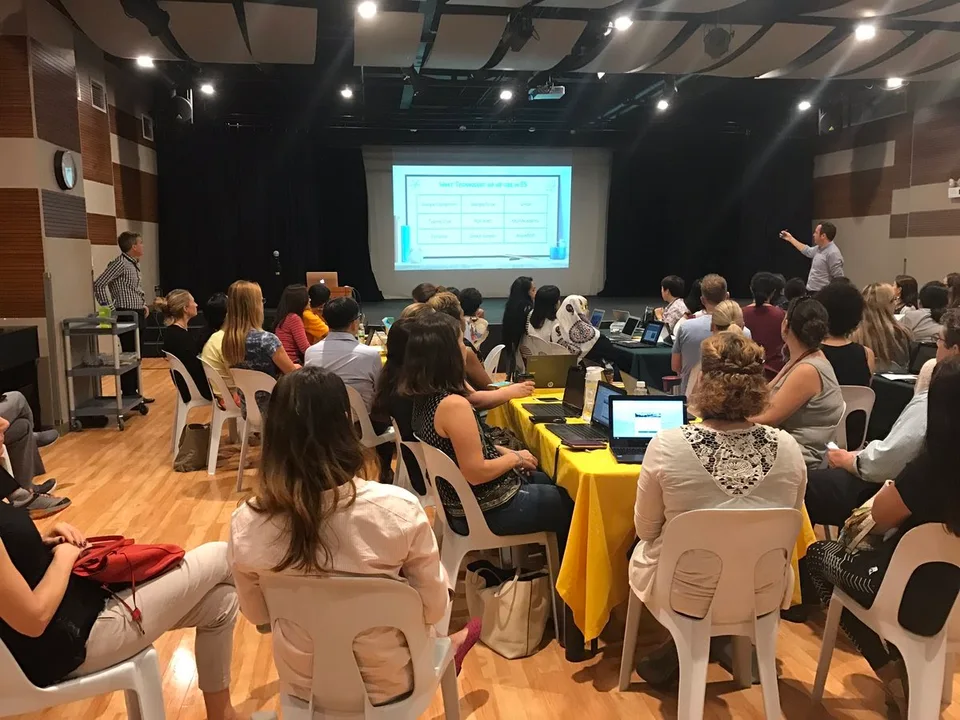
- Led Seesaw’s grade-by-grade introduction with teachers and families, using classroom examples to demonstrate voice notes, images and digital portfolios.
- Involved technology champions in testing tools and gathering feedback. Worked with parents on digital citizenship and understanding the learning behind the technology.
- Established Tech Hive in a room within the school library, ran sessions in the library and co-planned STEAM projects with year teams.
- Led the distance-learning toolset strategy, developed teaching templates and ran staff support clinics. Introduced Grade 4 Google Classroom to support transition into Middle School.
Learning documentation with Seesaw
During an upper-elementary plant inquiry, the teaching team found that written journals gave an incomplete picture of some pupils’ understanding. As technology coordinator, I worked with teachers to introduce Seesaw photographs and spoken explanations.
Reviewing the recordings together revealed reasoning about light and growth that was absent from the written work. We retained those ways of recording and replaced planned whole-class reteaching of observation skills with small-group teaching on scientific justification and controlling variables.
The useful distinction was between a barrier to expressing an idea and a gap in scientific understanding. My contribution was to help teachers gather and interpret that evidence, then decide what teaching was needed next.
Coding and making in Tech Hive
Activities included Bee-Bots, Spheros, LEGO Education coding and sequencing resources, and Makey Makey banana-piano circuits. I co-planned with year teams to connect the making with classroom learning. Children could photograph a model, talk through an idea or record a short explanation alongside the practical activity.
What came from it
The plant-inquiry recordings informed a specific change to teaching. Across the wider work, pupils had more ways to document and explain their ideas, alongside a making space within the library and reusable teacher support.
What I learned
A colleague’s question about learning value and workload helped me recognise that I had not explained the purpose clearly enough. I would now invite those questions earlier and start with a concrete classroom need. Shared examination of pupil work gives the conversation a useful focus and leaves room to revise my own approach.